
by James Zug
Day Two
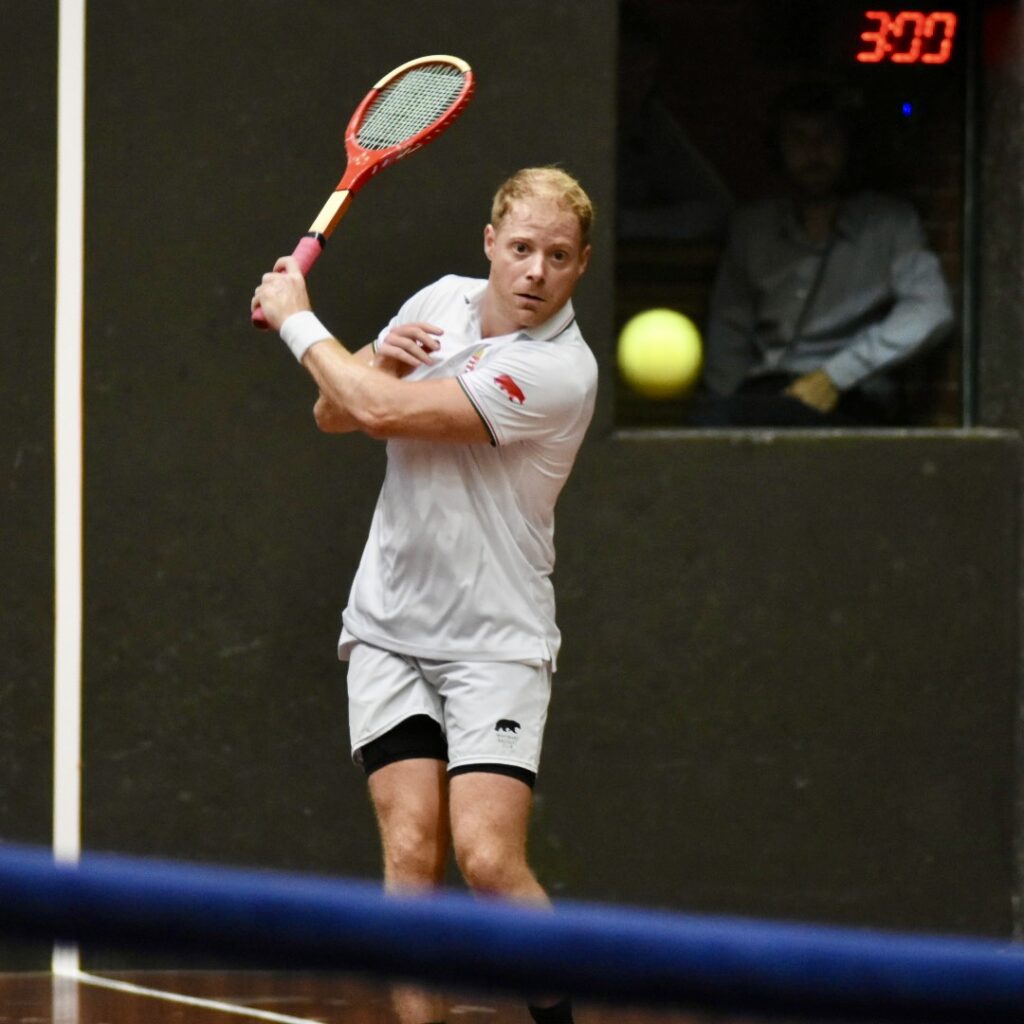
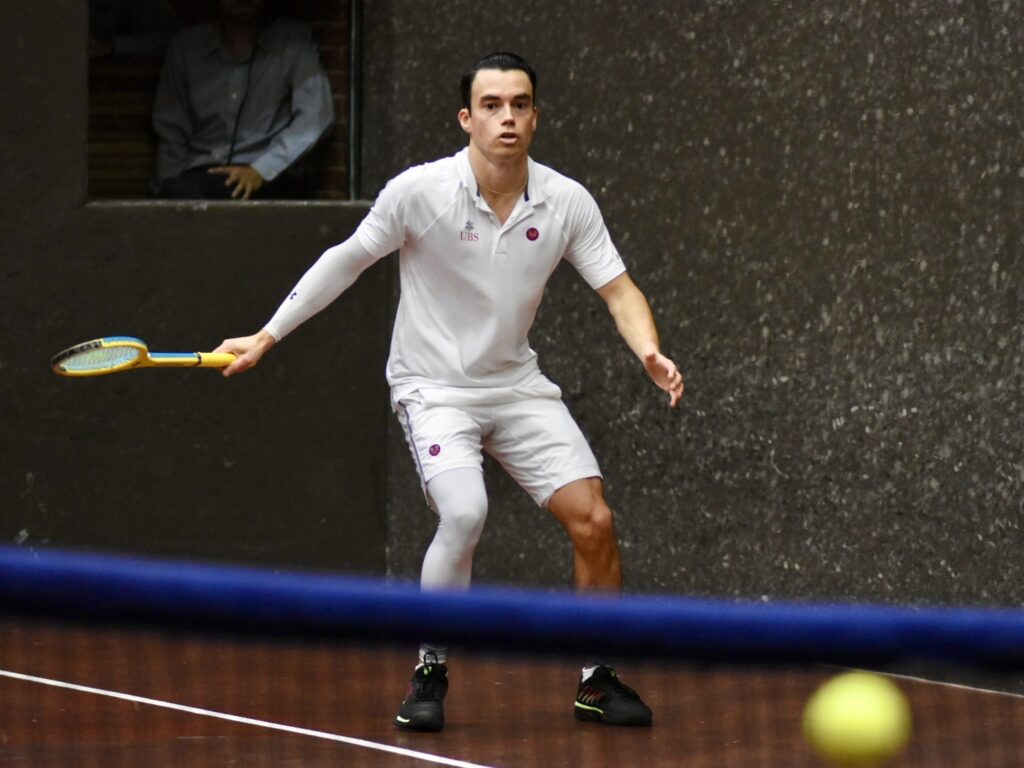
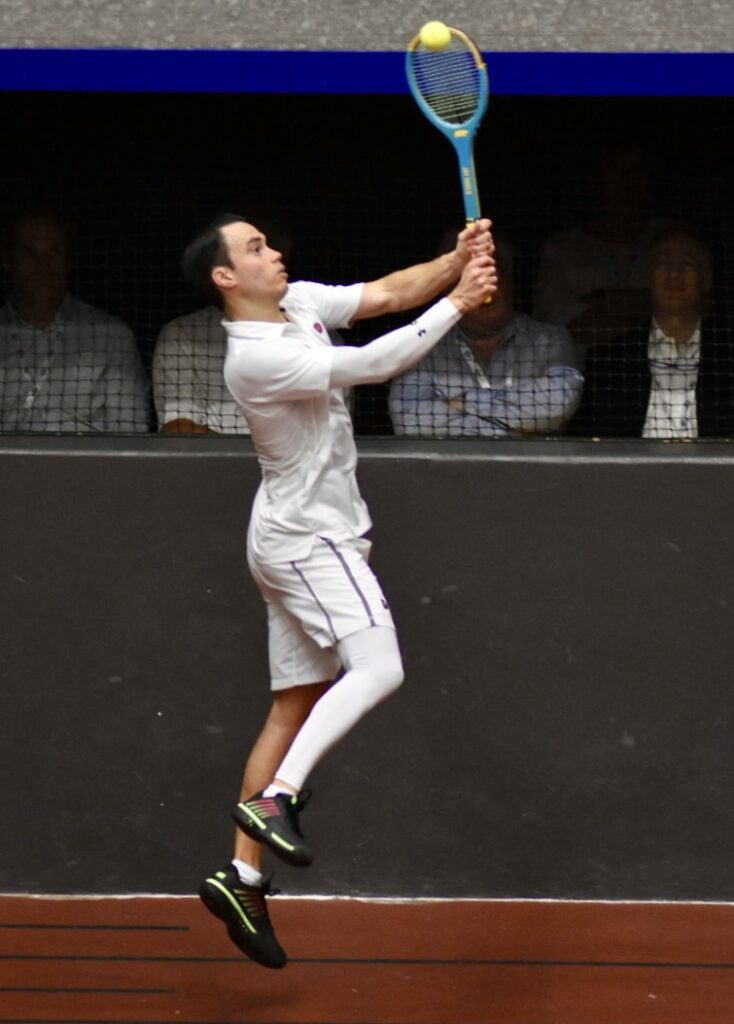
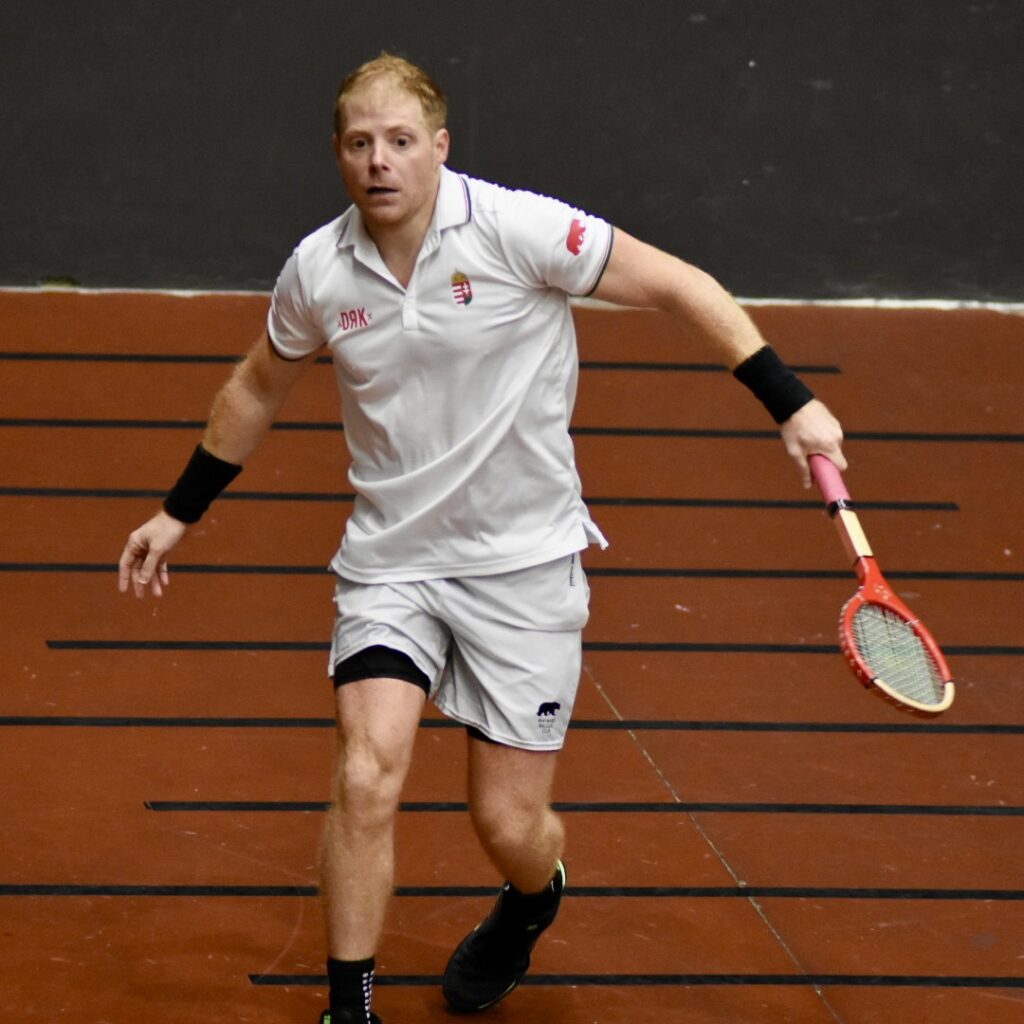
Camden Riviere beat John Lumley 5-6, 6-4, 6-4, 6-4. He retained his world championship title 6-2, 6-3, 6-4, 6-4, 5-6, 6-4, 6-4, 6-4.
It was a slightly different Day Two at the International Tennis Hall of Fame. It had rained most of Wednesday and all Thursday morning, a steady downpour for much of the time. Humidity was at ninety-six percent. There was a worry of the walls sweating.
Wednesday had been a busy off day. The Pineapple Cup, the handicap doubles event running in parallel with the Challenge, was in full swing. In the Casino Theatre Frederika Adam hosted a fifth international conference on the history of tennis. Speakers from around the world gave presentations on everything from archeological digs at French castles (who knew so many early tennis courts were in castle moats?) to the remarkable biography of Joseph Bickley, who had among forty-odd courts he worked on had actually remade the floor of the Newport court around 1910.
Many also gathered at the Newport Art Museum on Wednesday evening for the opening of “The Court: Art in Play.” One of the most extraordinary court tennis exhibitions the game has ever seen,, the museum, with Adam in the lead, had curated a few dozen works of art from the history of tennis. Some was brand new: a 2025 art book created by Elizabeth Curren and recent photographs and screen prints of Adam’s. Many were recent works of art that are now classics in the court tennis world: photographs by Charles Johnstone, Philip Howard and Adams; ink, paint and wax on linen images from Bill Sullivan; Joshua Mosley’s stop animation film; and Robert Manice’s watercolors. Some items were on loan from the International Tennis Hall of Fame’s collection: a Tom Pettitt racquet; the 1978 bronze bust, complete with a black beret, of Pierre Etchesaster; and most stunningly, two seventeenth century oil paintings of young people with tennis racquets. The exhibit, a can’t miss for any tennis aficionado, runs through the end of April 2026.
Tim Edwards, the British photographer, was quietly snapping photos at the museum opening. Edwards, a British photographer, has shot each Challenge since 2012. The USCTA awarded him the 2025 Plimpton Prize at Tuesday evening’s dinner at the Horseshoe.
The Challenge was again orchestrated by Susie Falkner, the chief executive of the International Real Tennis Professionals Association, who had run the World Championships since 2004. On the First Day expert commentary from their oubliette in the grille came from Adrian Kemp, a pro at the Racquet & Tennis Club, and Tony Hollins, the head pro at Newport who was also the tournament director; on the Second Day, Barney Tanfield, the head pro at the Racquet & Tennis Club, subbed in for Hollins.
Riviere came into Day Two with a massive lead. But not unsurmountable. The audience recalled what happened two years ago in the 2023 World Championship in Washington. Riviere won all four sets, relatively comfortably, on the First Day and then Lumley stormed back, taking three out of four on the Second Day (the last two sets at 6-5) to push it to a Third Day. That week Lumley wasn’t able to complete the comeback, winning one out of three sets on the Third Day.
It was a gigantic uphill task for anyone: no player had ever lost the first four sets in a Challenge and come back to win in the end. The best model was Tom Pettitt, the former head pro at Newport. In 1885 at Hampton Court, Pettitt lost three of the four first sets on the First Day and then the first two sets on the Second Day before remarkably reeling off six straight sets to capture the Challenge. At the same time, the odds Lumley to win two sets were definitely in his favor: every Challenge since 2006—eight in a row—had gone to a Third Day.
A few changes were evident as the players warmed up. Lumley didn’t have his watch on his left wrist. The first six times Riviere challenged, he used the service side to store his racquets, towels and water for access during change overs. This year, for the first time, he had set up shop in the hazard side, the more traditional spot for the world champion.
The fifth set started off with a bang. Riviere slapped a main-wall force the first time he touched a ball in play. Lumley smacked a ball into the grille on the second point. Riviere on the third point hit a backwards forehand. The pace was furious and at one point Riviere was massaging his left shoulder, having twinged it apparently. Lumley sprinted to leads of 3-1 and 4-2, but Riviere stubbornly reeled him back. He knotted the score at 4-all, the third of four times at this Challenge when a set went to 4-4. Riviere got to five first by hitting two grilles in a row and then having switched sides he drilled a dedans to take the game at love. At 5-all. John went up 30-love. It went to deuce. Lumley bagged a grille and then at advantage, Riviere guarded the galleries playing off a chase and instead Lumley calmly lofted a soft straight force into the dedans to clinch the set.
The stats for the best set of the Challenge: Riviere with three grilles and six dedans; Lumley with five grilles and three dedans. It lasted forty-three minutes.
The sixth set had one-way traffic for much of the thirty-nine minutes. Lumley wasn’t aggressive enough and Riviere’s length was sometimes immaculate. Riviere leapt to a 5-2 lead. He was hitting a variety of serves: high drops from the main wall, a hard demi-pique, a lot of devilish bobbles for second serves. Lumley on the other hand mostly stuck to his railroad which again had fizz and bite. His second serve, however, was a defensive soft demi-pique that didn’t trouble Riviere in the slightest. Still, down 5-2, Lumley zoomed back. He saved two set points at 5-3 but couldn’t push it further at 5-4. Riviere had two grilles and four dedans; Lumley five grilles and three dedans.
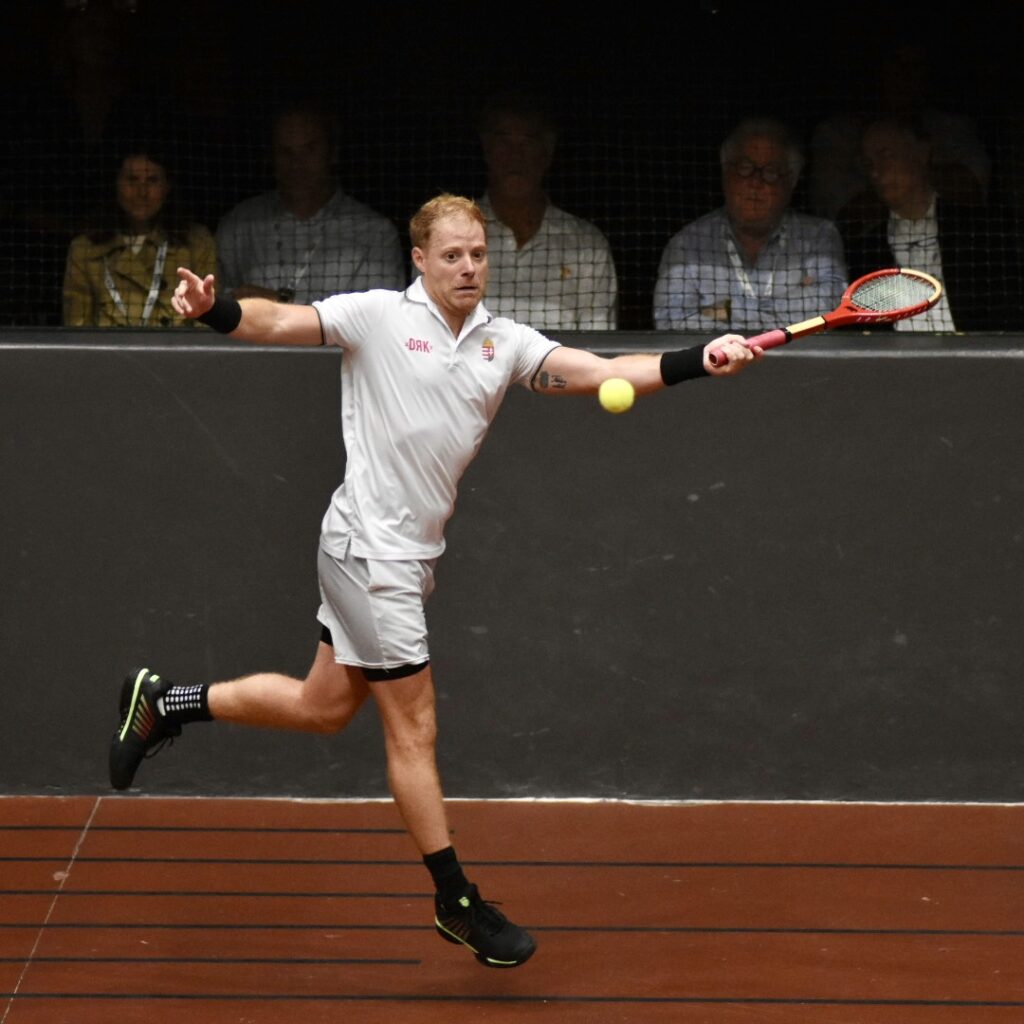
The seventh set lasted forty-six minutes and was full of targeting hitting: Riviere hit eleven grilles, six grilles and two winning galleries (nineteen galleries was perhaps his most ever for a set in a Challenge); Lumley totted up two grilles, two dedans and two winning galleries. Those numbers demonstrated how intent on ending points Riviere became in the set. Lumley was up 3-2 when a very long, tight game ensued in which Riviere battered three balls into the dedans. Up 4-3, Lumley was unable to find any breathing room. Both players blistered the ball. Lumley saved two set points but he couldn’t save the third.
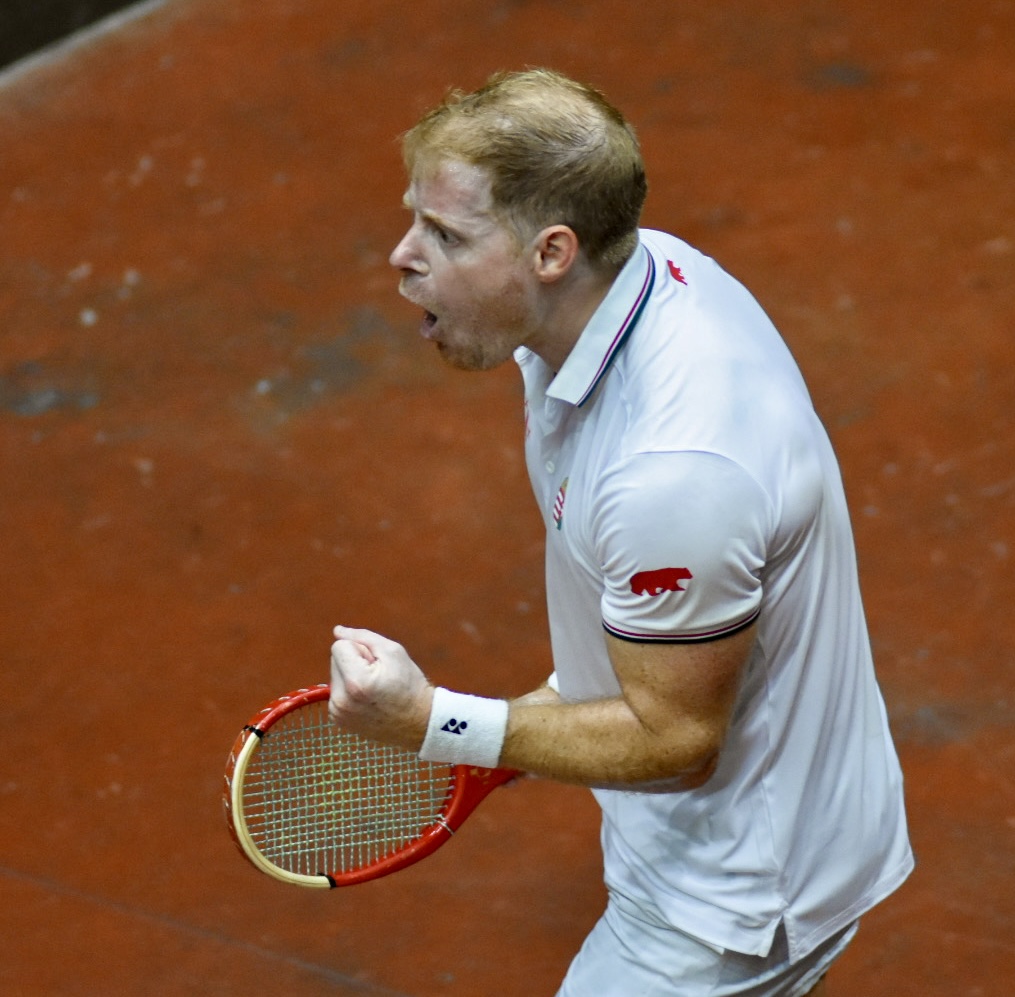
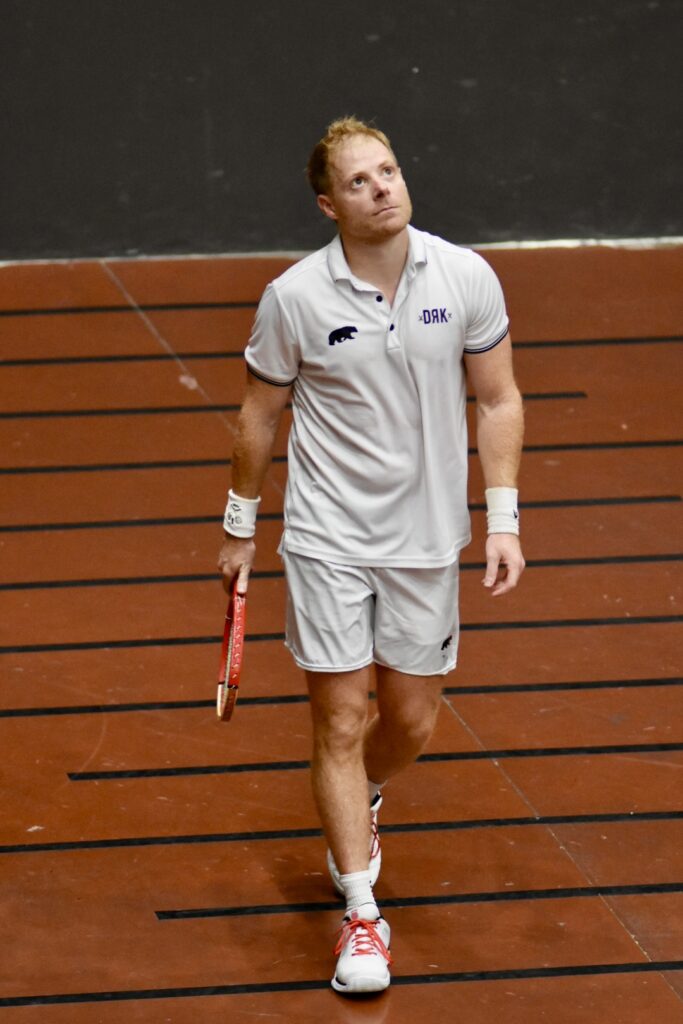
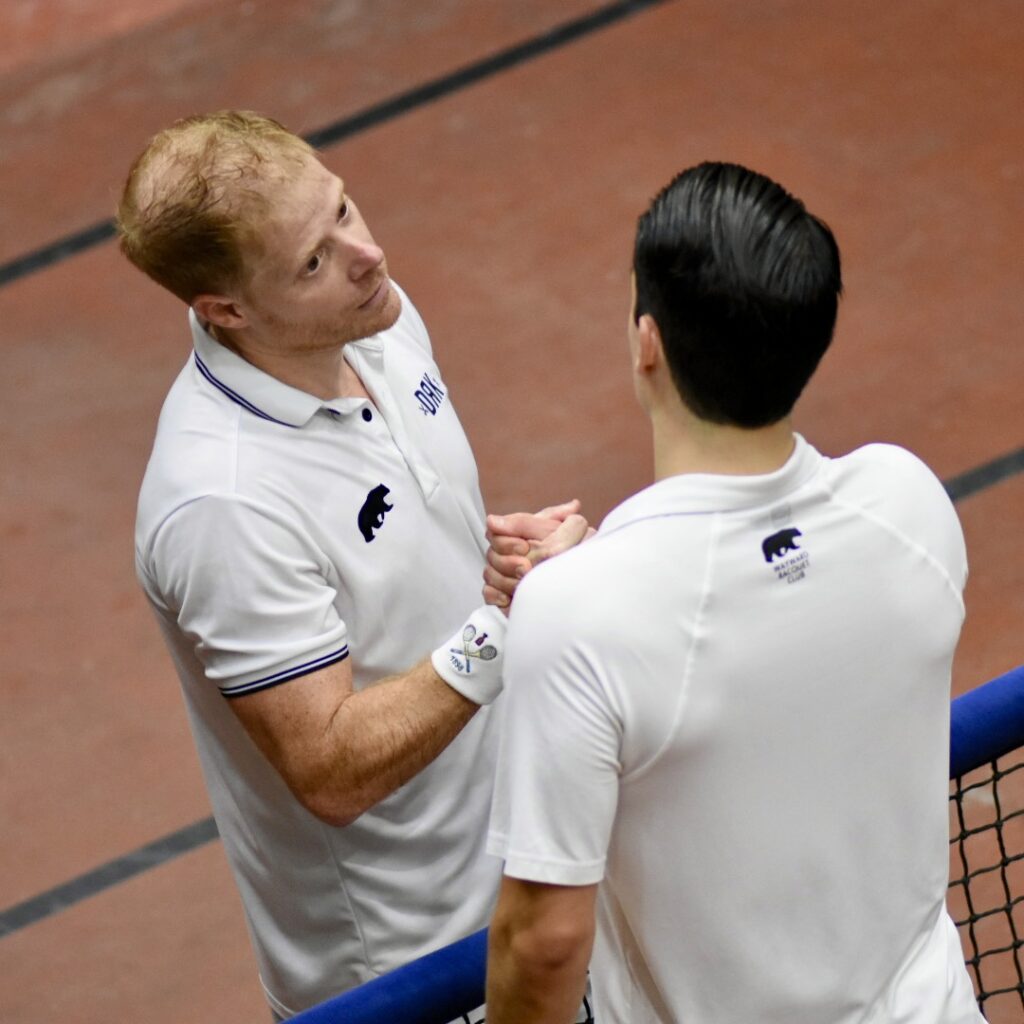
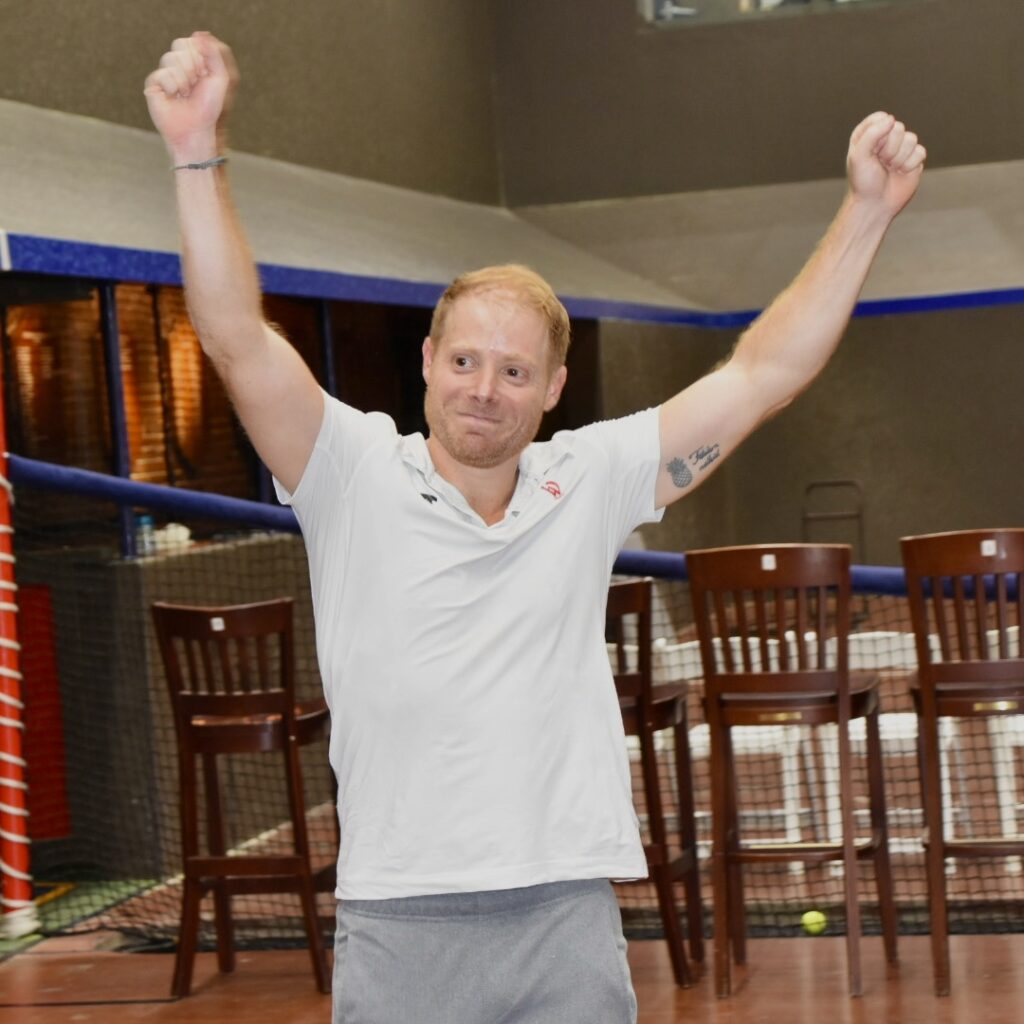
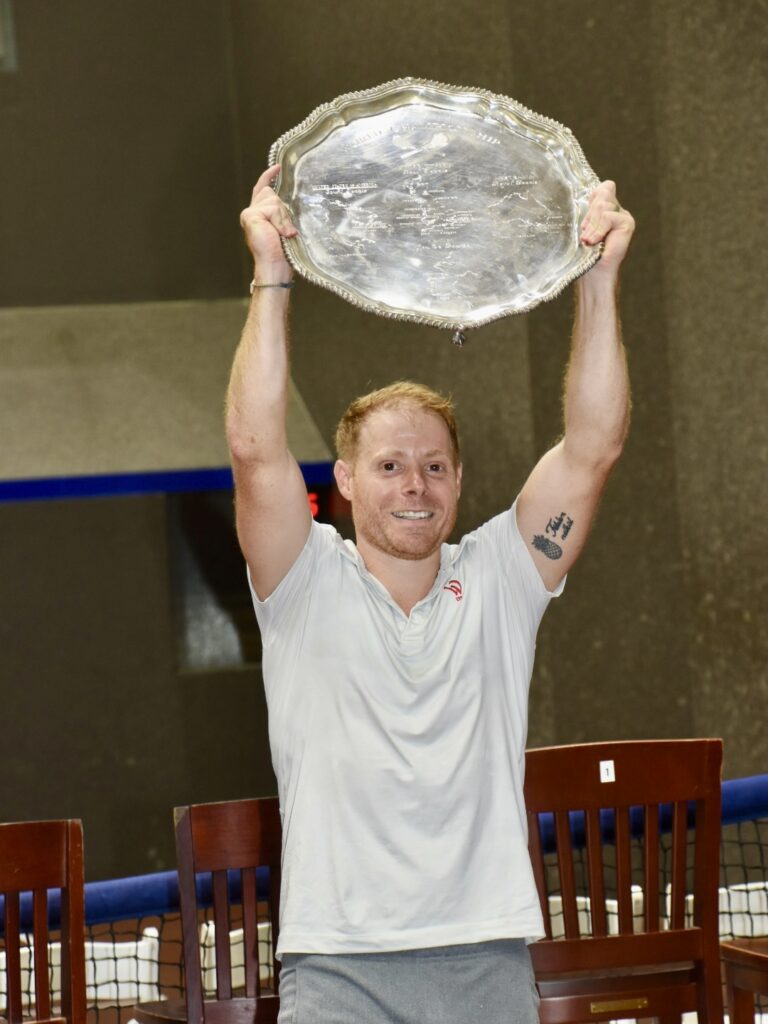
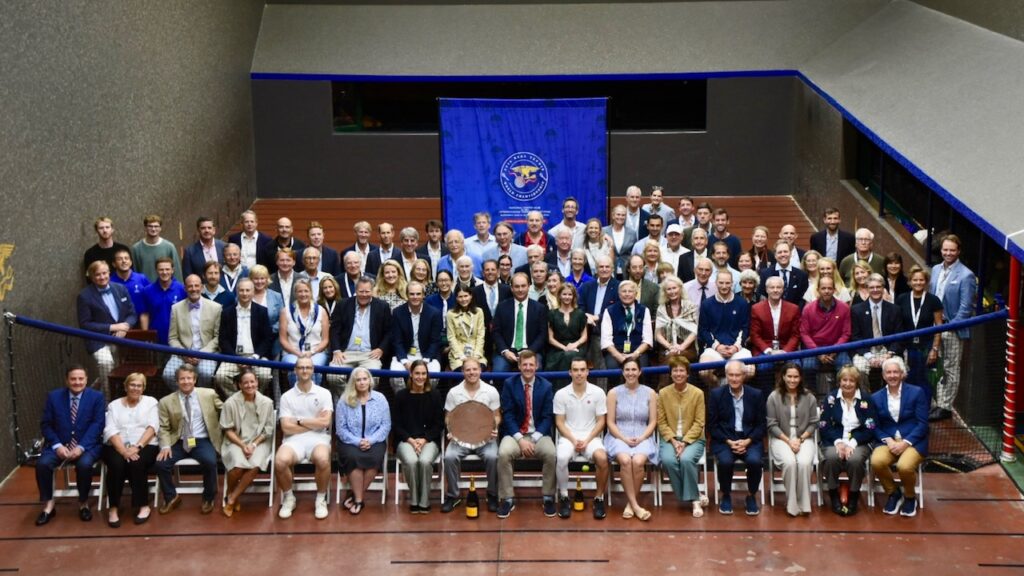
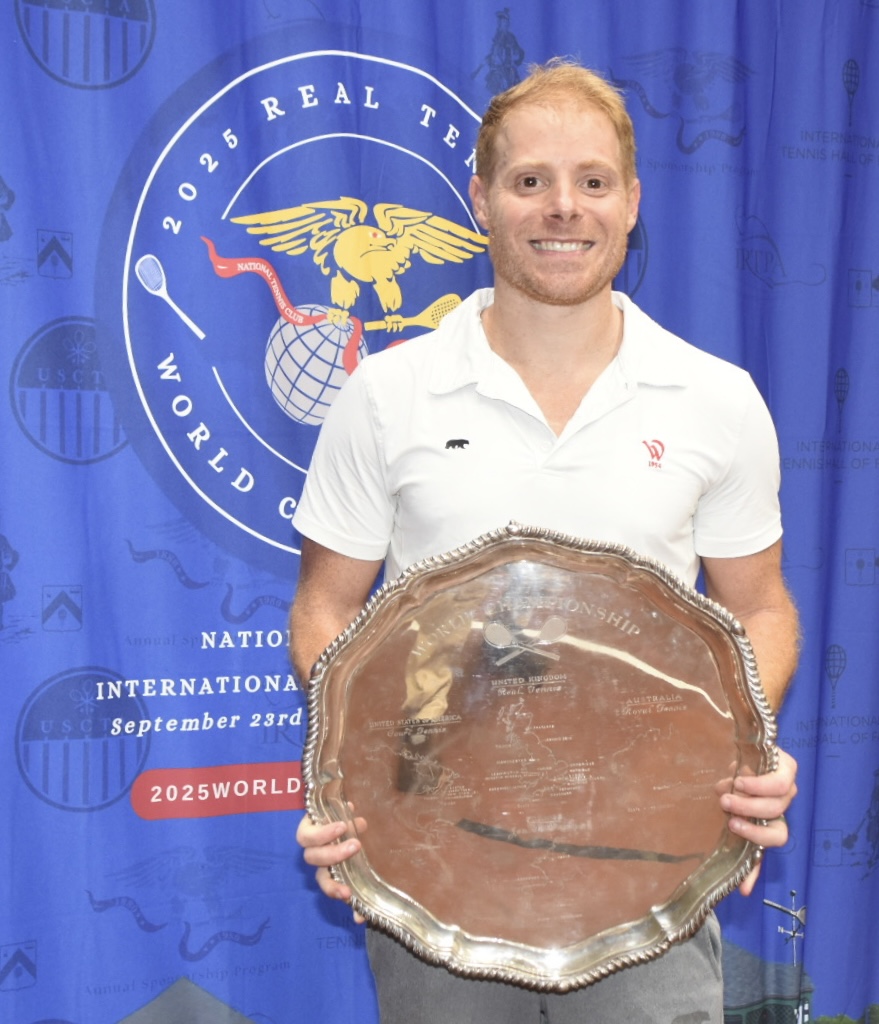
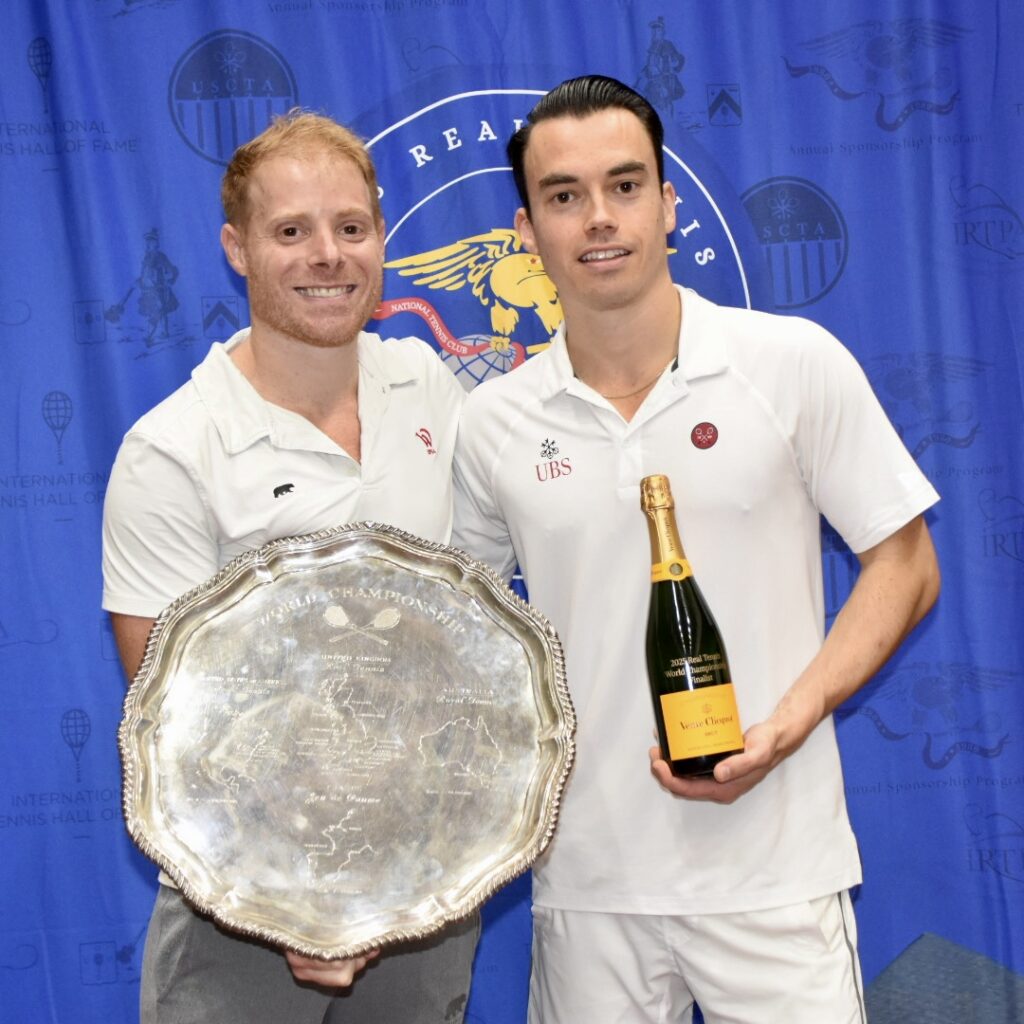
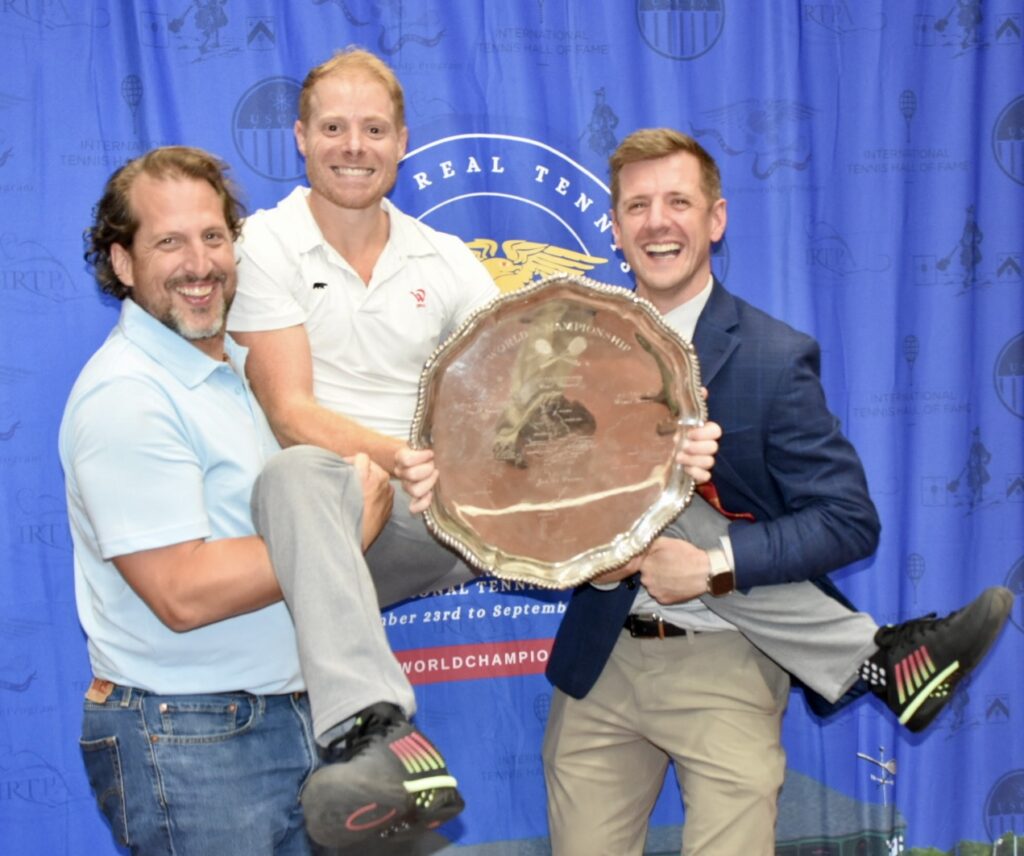
The beginning of the eighth set was quite flat, the end seemingly in sight. Riviere took the first two games in less than three minutes. Lumley won a long third game. Riviere ran rampant and pushed it to 5-1. (Totals were four grilles and six dedans for Riviere; five grilles, one dedan and two winning galleries for Lumley.) Lumley saved a championship point and tenaciously kept fighting. 5-2, 5-3, 5-4. (Total time for the set was forty-three minutes.) Was a comeback possible? Lumley saved two more championship points. Maybe. Then it was advantage Riviere and he was defending a chase worse than a yard. Impossible. Riviere won the point and almost immediately went to the net for a handshake: no celebration. Lumley and Riviere are close friends off the court. Afterwards, during the trophy celebration, both men were emotional. The Challenge is a challenge.
As David Foster Wallace wrote about Roger Federer two decades ago, this week those of us lucky enough to be in Newport saw close up power and aggression made vulnerable to beauty. And this helped us to be reconciled, in a human, mortal way, with this thing called life.
Photo Slideshow – Credit Tim Edwards, WC Photographer